
 By The Precedent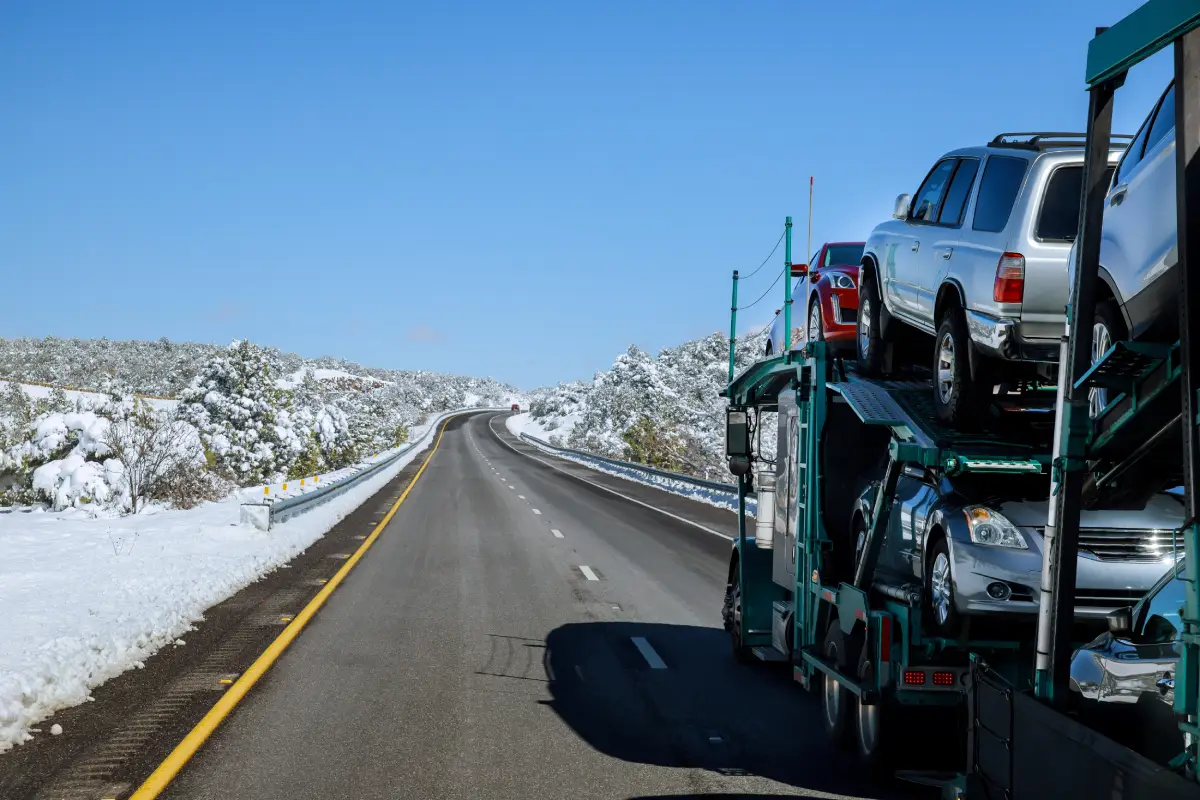
Australia’s road network moves enormous freight volumes: in 2024–25, road transport accounted for approximately 253 billion tonne kilometres of freight nationally, with NSW alone hitting a record 87.6 billion tonne kilometres. Private vehicle transport rides on top of that same infrastructure, quietly and efficiently.
Most people shipping a car interstate hit the same wall: they find dozens of carriers, have no clear way to compare them, and aren’t sure what can go wrong. The wrong booking costs you time, money, and, in the worst case, an uninsured repair bill.
This guide covers how vehicle transport interstate actually works in Australia, what it costs, how to prepare your car, how to filter out bad operators, and what your options are if something goes wrong on delivery.
Table of Contents
- What Is Vehicle Transport Interstate?
- Open vs Enclosed Transport
- Door-to-Door vs Depot-to-Depot
- What Determines the Cost
- Transit Times by Major Route
- How to Prepare Your Vehicle
- Documents You Actually Need
- How to Vet a Carrier Before You Book
- The “Goods in Car” Option
- What Happens If Your Vehicle Is Damaged
- Conclusion
What Is Vehicle Transport Interstate?
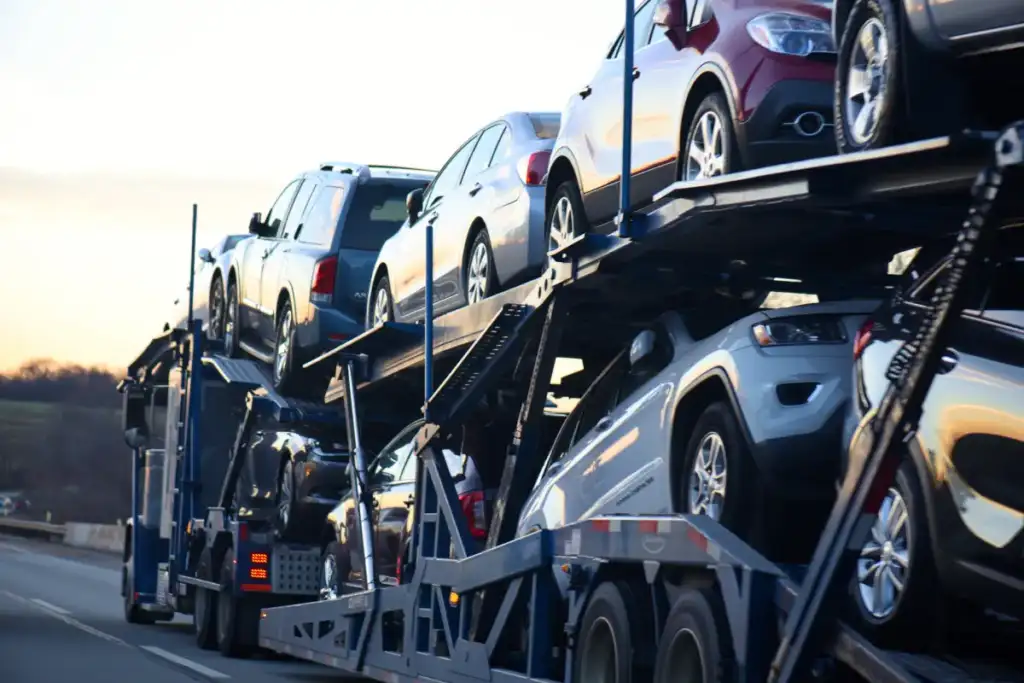
Interstate car transport, also called car freight, vehicle shipping, or a car carrier service, is the process of moving a vehicle from one state or territory to another using a professional carrier. You hand over the keys; a transport company loads your vehicle onto a carrier truck and delivers it to a nominated address or depot.
The service handles any road-registered (or even non-registered) vehicle: sedans, SUVs, utes, motorcycles, campervans, and in some cases, boats and trailers. Caravans sit in their own category; they require specialist towing equipment and weight-rated carriers rather than standard car carrier trucks. If your primary need is a caravan rather than a passenger vehicle, a dedicated specialist like Interstate Caravan Transport.com is worth contacting separately, since general car carriers often decline caravans or quote inflated rates for a job outside their core fleet capability.
The two primary decisions you make upfront are: what type of transport you want (open or enclosed), and what delivery method suits your situation (door-to-door or depot-to-depot). Everything else, cost, lead time, and paperwork flows from those two choices.
Open vs Enclosed Transport
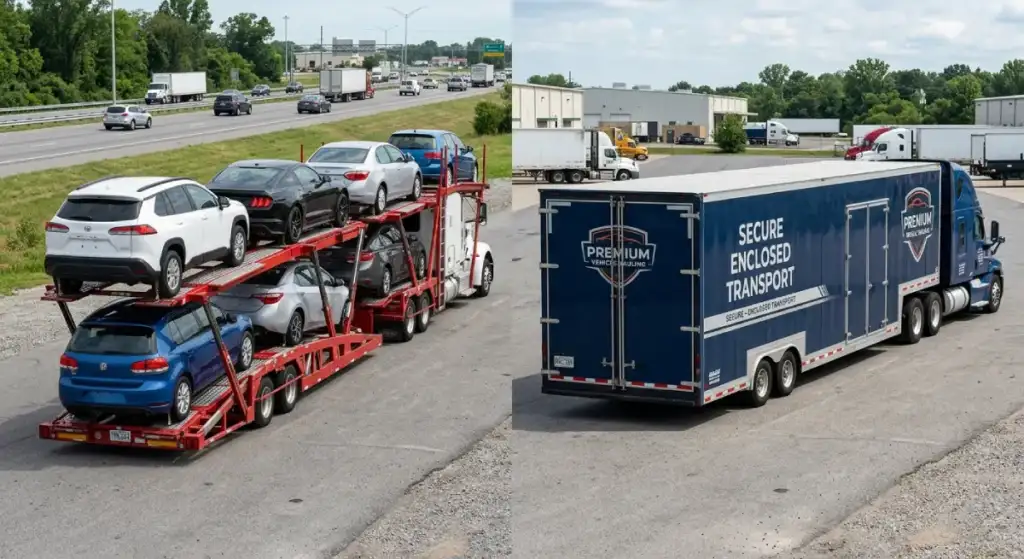
These are not interchangeable. They serve different needs at different price points.
Open transport
Loads your vehicle onto a multi-car trailer with no sides or roof. It is the standard method used by the majority of Australian carriers. Exposure to road debris, dust, and weather is real but statistically minor; most vehicles arrive without a mark. It is the right choice for everyday passenger vehicles.
Enclosed transport
Uses a fully sealed trailer. Enclosed transport typically costs 25–35% more than open transport for the same route, driven by specialist equipment and reduced carrier capacity per load. It is appropriate for luxury vehicles, classic cars, low-clearance sports cars, or any vehicle where cosmetic exposure carries a financial penalty.
| Factor | Open Transport | Enclosed Transport |
| Weather/dust exposure | Yes | No |
| Cost premium | Baseline | +25–35% |
| Carrier availability | High | Limited — longer lead times |
| Suitable for | Everyday vehicles | Luxury, classic, low-clearance |
| Visibility of vehicle in transit | Yes | No |
| Loading risk | Standard ramp | Hydraulic lift (lower risk) |
Do not pay for enclosed transport on a vehicle that doesn’t need it. Conversely, do not cut costs on enclosed transport if your vehicle’s finish is part of its value.
Door-to-Door vs Depot-to-Depot
Door-to-door
Means the carrier collects from your address and delivers to a destination address. It is the most convenient option. It is also more expensive, and in some rural or suburban areas, a large multi-car carrier physically cannot navigate residential streets. In those cases, carriers substitute a smaller delivery vehicle, or they ask you to meet them at a nearby accessible point.
Depot-to-depot
Means you drop your vehicle at a carrier’s depot in your city and collect it from their depot at the destination. It costs less and is often faster, since your vehicle moves on the next scheduled linehaul run rather than waiting for a door-to-door pickup slot to open up. For anyone who can arrange a lift to a depot, this is almost always the better value option.
Some carriers also offer hybrid models: depot pickup, door delivery, or vice versa. Ask explicitly.
What Determines the Cost
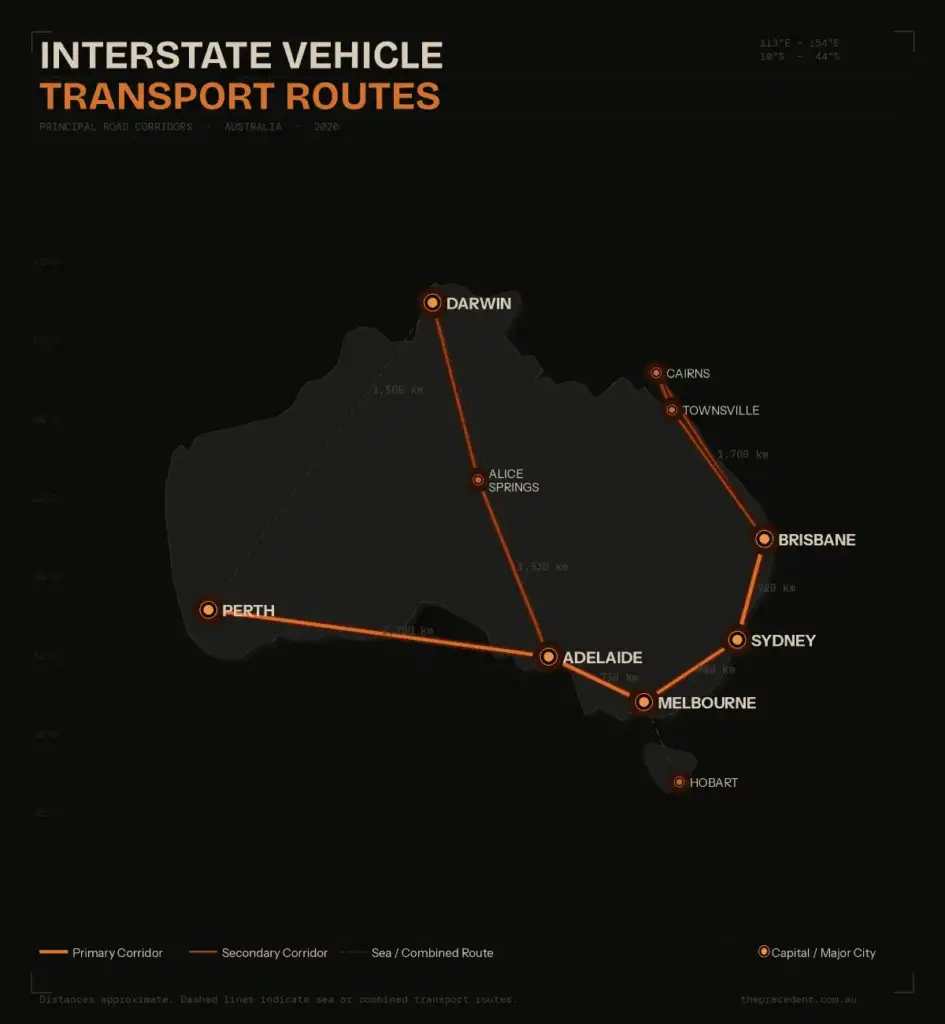
Pricing for vehicle transport interstate in Australia is not fixed. These are the variables that move the number:
Distance is the single largest factor. A Sydney to Melbourne run (around 900 km) costs materially less than a Sydney to Perth run (over 4,000 km). Fuel, driver time, and road tolls scale with every kilometre.
Vehicle size and weight. A motorcycle takes up a fraction of the carrier space a full-size ute does. Larger, heavier vehicles, such as campervans, 4WDs with roof racks can require specialist loading equipment and occupy space that would otherwise carry two standard cars.
Transport type. Enclosed versus open, as covered above, carries a 25–35% premium.
Pickup and delivery method. Door-to-door adds a loading on top of the linehaul rate.
Seasonality. Demand spikes during school holidays, end-of-financial-year relocations, and around Christmas. Booking during off-peak periods mid-school-term, February to March, reduces both cost and lead time.
Route popularity. High-frequency corridors like Sydney to Melbourne or Brisbane to Sydney attract competitive pricing. Low-volume routes like Darwin to Hobart involve consolidation delays and carry a premium.
Transit Times by Major Route
Lead times include both the time before your vehicle is collected and the time in transit. Do not confuse the two.
| Route | Typical Transit Time (in transit) | Estimated Total Lead Time |
| Sydney to Melbourne | 1–2 days | 2–5 days |
| Melbourne to Brisbane | 2–3 days | 3–7 days |
| Sydney to Brisbane | 1–2 days | 2–5 days |
| Melbourne to Adelaide | 1–2 days | 2–5 days |
| Any east coast to Perth | 7–14 days | 10–21 days |
| Any east coast to Darwin | 10–18 days | 14–25 days |
These are working estimates. Remote-area deliveries and consolidation routes (where your vehicle waits for a full load before departure) add time. Always confirm actual lead times with your specific carrier at the time of booking.
How to Prepare Your Vehicle
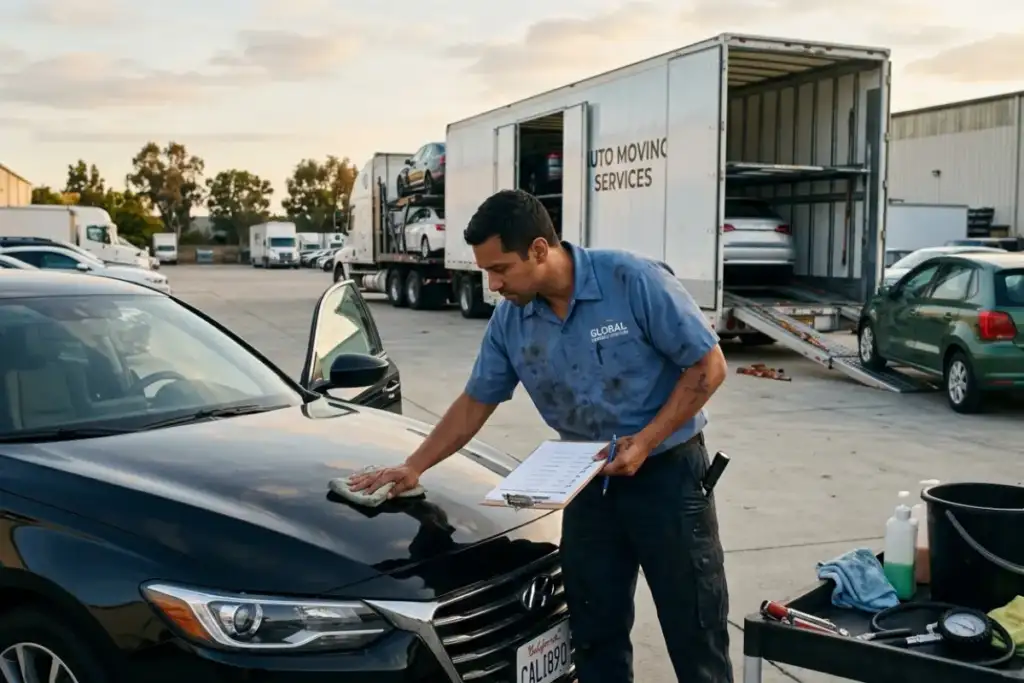
Preparation protects your claim rights. If you hand over a dirty vehicle and it arrives with a mark, proving whether that mark was pre-existing or transport-related becomes impossible.
Wash the vehicle before pickup
A clean car makes every pre-existing scratch, dent, or chip visible on the condition report.
Photograph everything.
Walk around the vehicle and document every panel, the roof, the undercarriage if accessible, and the interior. Timestamp your photos.
Remove personal belongings.
Carriers generally do not cover items left inside the vehicle. Remove anything of value. Some carriers also restrict the weight of personal items they will carry inside the cabin check before loading anything.
Fuel level.
Keep the tank at no more than a quarter full. A full tank adds weight and creates a safety risk during loading and unloading. The exception is carriers who offer a “Goods in Car” option, who have specific fuel and weight thresholds.
Check the mechanics.
The vehicle must be able to roll, steer, and brake under its own power. If your vehicle cannot do this, you need to specifically arrange non-runner services, which are available but must be booked in advance and cost more.
Checking tyre pressure and condition before handover matters more than most people realise. A flat or significantly underinflated tyre complicates loading and, depending on the carrier’s terms, can be grounds to refuse collection.
Disable alarm systems.
An alarm that triggers in transit without anyone to deactivate it creates a problem for the carrier and a discharged battery on delivery.
Documents You Actually Need
The paperwork involved is minimal. Australia does not require your vehicle to be registered to transport it interstate. Your vehicle does not need to be currently registered to be transported interstate; it must simply be safe to load and able to roll, steer, and brake unless you have arranged non-runner services.
What you will need in practice:
- Proof of identity (driver’s licence) at pickup and delivery
- Booking confirmation from your carrier
- Condition report signed by both parties at pickup, keep your copy
- Insurance documentation from the carrier (request this before booking, not after)
If you are transporting a vehicle you do not personally own (a dealership sale, a vehicle bought online), some carriers require proof of ownership or written authorisation from the registered owner. Clarify this when booking.
How to Vet a Carrier Before You Book
This is where most people make avoidable mistakes. The cheapest quote and the best carrier are rarely the same entity.
Check their Australian Business Number (ABN). Verify it is active on the ABN Lookup tool (abr.business.gov.au). An inactive ABN is a red flag.
Confirm transit insurance. Ask the carrier directly: “What does your transit insurance cover, and what is the maximum claim limit?” A legitimate operator answers this clearly. Vague answers about “comprehensive coverage” with no specifics are a warning sign.
Verify they are the actual carrier, not a broker. Some companies sell you a booking and then subcontract the job to a third-party carrier you have never vetted. This creates insurance and accountability gaps. Ask: “Will your own trucks and drivers handle this job, or do you use subcontractors?”
Read recent reviews, not aggregate scores. A 4.7-star average built on 200 reviews from 2021 tells you nothing about current service. Filter for reviews in the last six months and read the negative ones carefully.
Get the condition report process in writing. Before you commit, ask how they handle damage claims. A carrier confident in its service will have a documented process. One who deflects that question will deflect your claim later.
The “Goods in Car” Option
Some carriers allow you to place personal items inside your vehicle during transport, effectively using the car’s interior as moving storage. This is useful when relocating interstate and wanting to reduce removal truck costs.
The restrictions are real and non-negotiable:
- Weight limits typically apply to 80–100 kg maximum
- Items must not block rear vision or be placed on seats
- Items must not be fragile, hazardous, or of high value
- The carrier’s transit insurance does not cover these items
- Customs-restricted goods (certain foods, soil, plant material) are prohibited when crossing specific state borders
When the “Goods in Car” option is selected, carriers will allow limited personal items in the vehicle, subject to restrictions. Confirm those specific restrictions with your carrier before loading anything, as they vary between operators.
What Happens If Your Vehicle Is Damaged
This section is the one most guides skip. Know this before something goes wrong, not after.
Step 1: Note it at delivery
Do not sign the delivery condition report if the vehicle has new damage. Mark the damage specifically on the condition report before you sign, and photograph it immediately. If you sign without noting the damage, your claim becomes significantly harder to pursue.
Step 2: Notify the carrier in writing within 24 hours
Most carriers have a formal claim lodgement window some as short as 24 hours, others 7 days. Read your booking terms. Send written notification via email, not a phone call, so you have a timestamped record.
Step 3: Get an independent repair quote
Obtain a written quote from a panel beater or relevant specialist. Do not get a repair done before the carrier has had the opportunity to inspect the damage this can void your claim.
Step 4: Understand the insurance limit.
Transit insurance covers damage caused during transport, up to the policy limit. If your vehicle’s assessed repair cost exceeds the carrier’s per-vehicle coverage limit, you are responsible for the difference. This is why carrying your own comprehensive insurance during transit is worth considering for high-value vehicles.
Step 5: Escalate if the carrier is unresponsive
In Australia, you can lodge a complaint with Fair Trading in your state or the relevant state’s Consumer Affairs office if a carrier refuses to engage with a legitimate claim.
Conclusion
Vehicle transport interstate in Australia is a well-established service, but the quality gap between carriers is wide enough to matter. Choose verified insurance, a documented condition report process, and a carrier that operates its own fleet, not on price alone. Follow the preparation and vetting steps in this guide, and you will have removed the majority of risks before your vehicle even leaves the ground.